Showing posts with label Life and Customs of the Jews. Show all posts

Sunday, 2 November 2014

VICTOR KARBEN: WHY JEWS DISCRIMINATE AGAINST WOMEN

More excerpts from my translation of Karben’s The Life and Customs of the Jews , 1511

Chapter 15
Why the Jews discriminate against women.
They cannot even prove that they are Jews like their husbands or the other males, who can prove it by their circumcision. For this reason they are not considered worthy to have an eternal life or to converse with God. For God has often called on men, but never on women. See Proverbs 8: “O men, I call to you.” Thus Jewish men have a special prayer which they say every single day: “Praise to God in eternity for making me a man rather than a woman!” 
Chapter 16
The Feast of Yom Teru’ah.
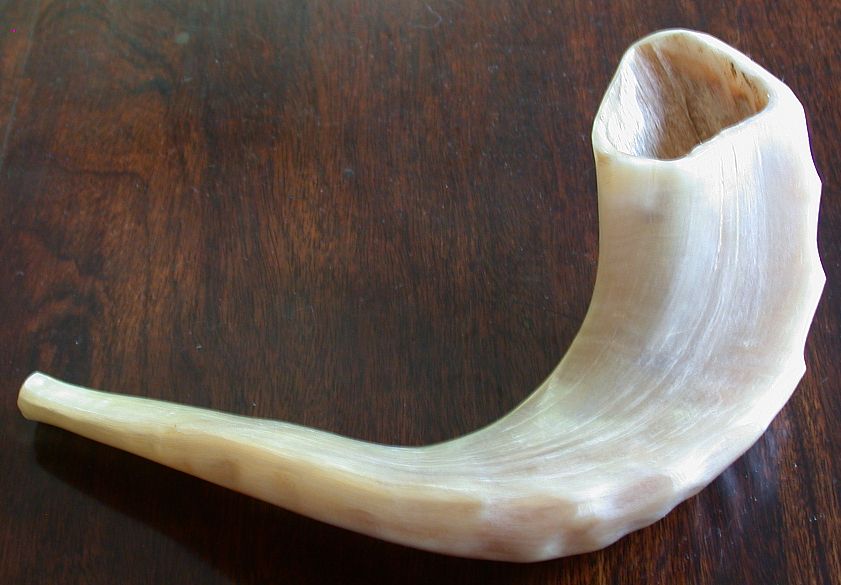
They celebrate the 1st of September with great joy. They sing and blow trumpets and horns – not just any kind, but instruments made of bone and the horns of rams.  The origin of the custom is the biblical passage describing Isaac being spared because the ram’s horns are caught in a thicket.
Karben also connects the feast with the fall of Jericho’s walls at the sound of trumpets (Joshua 6). Furthermore, the Jews believe that demons cannot bear hearing the noise of those horns and therefore cannot prevent prayers from rising to heaven. The man who blows the horn must be an excellent and most respectable Jew worthy of that holy instrument. If he blows it properly, the people are incredibly pleased. If not, you will see them much aggrieved. For they say a mistake [in blowing the horn] does not happen without reason. No doubt it happened on account of their sins, and they believe they will not be successful in anything that whole year.
They also connect the first day of September with the creation of the world.
On that day they hope God will write their name in the Book of Life, and no one dares to sleep that day, lest God’s angel be obliged to sleep as well.
In the morning they go to a nearby river. They stand on the bridge that spans the river and carefully search the water for small fish. When they see them, they are full of joy and cast their clothes over them. As the fish scatter, their sins too are being carried away, or so they believe.
On the 10th day of September, they gather in the synagogue to pray. If a Christian saw them, he would certainly wonder at their uncoordinated movements and distracted behaviour. For as they pray to God, they yell and shout and at the same time move their bodies to the right and the left, forward and backward.

(Next: Yom Kippur, as described by Karben)

Thursday, 23 October 2014

VICTOR KARBEN ON PREJUDICE AGAINST JEWISH CONVERTS.

More from my translation of Victor Karben’s The Life and Customs of the Jews (1511):

After converting to the Christian faith, Karben found that he was treated with suspicion.
But I foresaw all the difficulties Christians were going to make for Jews who undergo baptism … but I have decided under no circumstances to go back on my resolve, and to bear everything with equanimity for the sake of Christ.  But another thing pierced my heart sharply: the knowledge that the Jews themselves often said a recently baptized Jew was very similar to a new white piece of fabric. Shallow people are glad and pleased with a piece of cloth while it is new and white, but after it has been made into a dress and worn on their backs for eight or nine days, it becomes less treasured with every passing day. The same thing happens to a newly baptized Jew.  Christians are keen on him at first. They are eager to talk and invite him for dinner. If they go anywhere, for the sake of comforting him, they ask him to accompany them and walk by their side. But after eight days they keep out of his way. He is neglected, avoided, excluded, and left to himself. Even worse, he is often derided and teased by the same people.
            After these autobiographical remarks, Karben turns to his task proper: a study of Jewish customs. He explains, for example, that they do not eat meat together with milk or cheese and any other milk products… Furthermore the Jews are obliged by the law of the Talmud to keep their knives separate. If they have two, one is for the use of eating meat, the other for use with other foods.  But that precept didn’t seem to go far enough. In addition they must store the knives in separate drawers, to keep one from touching the other. And they must be stored in such a manner that they may be able to tell them apart and know which knives to use for what purpose. To make it easier to tell them apart, the Talmud advises to put a mark on each single knife. Those meant for eating milk products are marked with a small triple notch… If it happens, by some chance or on purpose, that the use of the knives is mixed up and someone uses a knife to cut meat which until then was used to cut milk products or vice versa, it cannot be used for food from there on, and the matter does not go unpunished.
            If this happens to a poor man who cannot afford to discard a wrongly used knife, he must place his knife into a burning fire for three hours until it is white hot, then he must bury it in the ground for up to three days. Afterwards he must take it out and dip it three times into a well or other flowing water…


(Source: Victor Karben, De vita et moribus Iudeorum, Paris 1511)