Showing posts with label Napoleon. Show all posts

Thursday, 2 April 2015

ENTERTAINING TWO EMPERORS: NAPOLEON AND ALEXANDER I
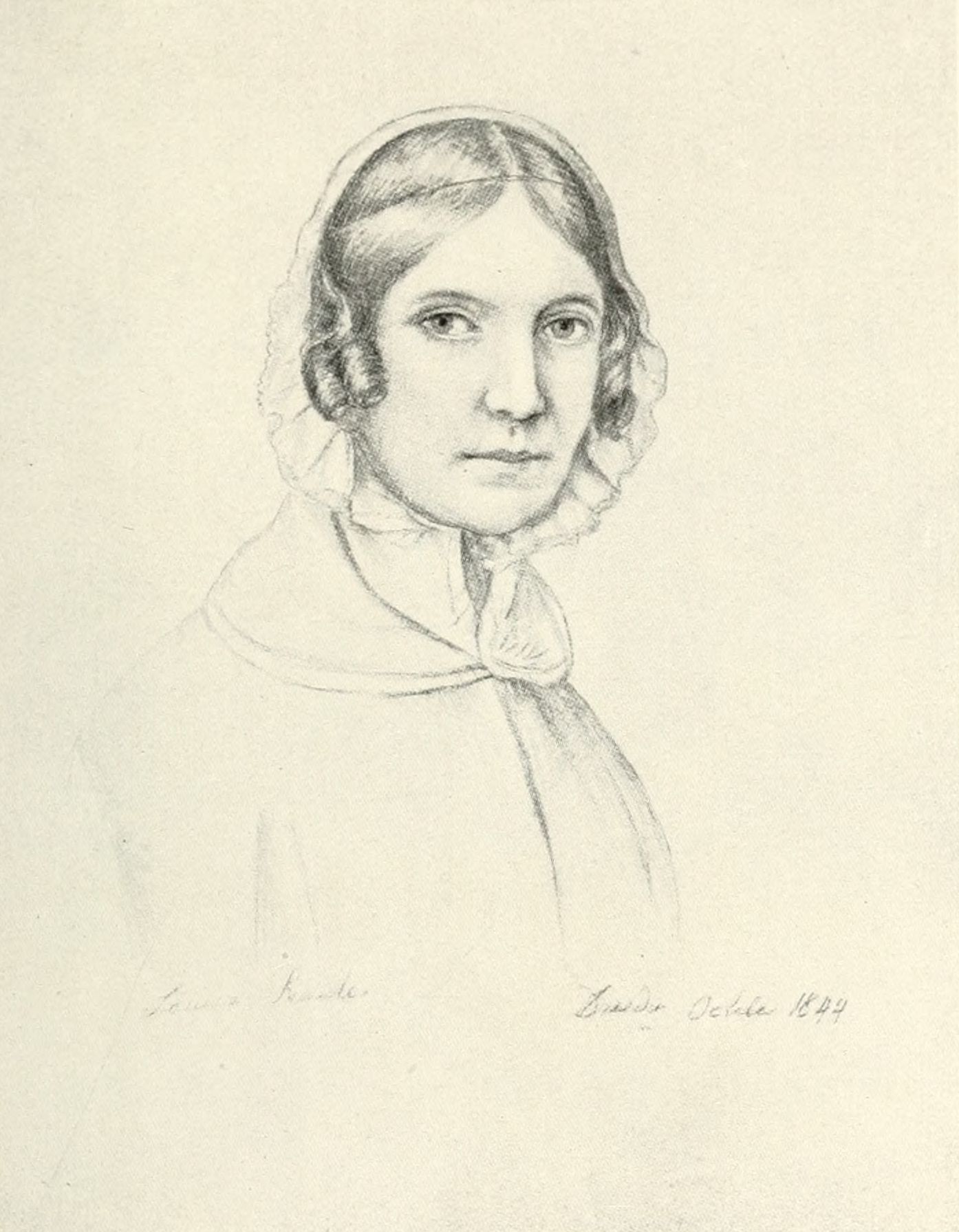

[As told by Weimar painter Luise Seidler]
I saw Tsar Alexander and Napoleon driving through the streets of Weimar in a small open hunting carriage, Napoleon on the right side, Alexander on the left. Napoleon had brought French actors with him. As a gallant gesture to Duchess Louise, he had Racine’s The Death of Caesar performed in Weimar. The tickets were not for sale, but handed out by the court.

[An acquaintance gave Luise his ticket]
As each of the rulers entered, there was a drum roll befitting his rank. The stage was carpeted. The play was performed without intermission. The curtain wasn’t even lowered. The two emperors sat in red velvet chairs on a raised platform at the front. To their right and left sat the kings of Wurttemberg, Westphalia, Bavaria, and Saxony…and behind them the counts and dukes…diplomats and generals. Starry medals glittered and ribbons glowed on the embroidered uniforms. Everything was splendid and sumptuous.
[The ladies sat in the loges and in the balcony.]
In spite of the masterful performance, Napoleon fell asleep…the rest of the noble audience made an effort not to offend against etiquette.

A day earlier there had been a hunt on the Ettersberg, which I also watched. A hall had been erected on the plateau of the mountain and decorated with branches of fir trees. They were festooned with red berries to lighten the gloomy dark green. On three sides of the hall bleachers had been set up for the audience to watch the proceedings. The monarchs stood at the open end of the hall, and behind them hunters who loaded their guns. The quarry was driven past them within shooting range. First came a beautiful doe. When the poor animal collapsed in its blood, I felt so sad in my heart that I sobbed loudly and hurried back to the city.

(Source: Luise Seidler. Erinnerungen und Leben; my trans.)

Thursday, 19 March 2015

THE BATTLE OF JENA, 1806 -- THROUGH THE EYES OF A WOMAN.

Luise Seidler was twenty years old when French troops passed through her native town to fight the Prussian army.

The road was so narrow that the cannons couldn’t be pulled by horses. The soldiers had to carry them. A handful of Prussians could have stopped and destroyed them.
But the Prussians confronted Napoleon’s troops on the plain of Apolda. 

A few hours into the day -- 14 October 1806 -- a large number of wounded men and refugees poured into the city and were put up in houses, churches, and public buildings. They spilled over into the streets and plazas and told the story: the Prussians had been trounced. Soon afterwards, the victorious French army marched into the city and occupied the castle. They began looting stores and houses. The Seidler family was spared only because their quarters were occupied  by Field Marshal Jean Lannes. Luise's father was sent out with a driver to requisition food and wine for Lannes and his men.

 Half an hour later, the driver came into my room, out of breath and pale as a corpse. “For Heaven’s sake, come quickly,” he said. “They are killing your father because he can’t make himself understood.” I rushed down to the lower floor, which had been occupied by French soldiers of all kinds. I looked them over and grabbed the arm of one whose noble face gave me confidence, and dragged him off. “Mademoiselle, que voulez vous?” he cried out, surprised. I explained the situation to him. He went with me and found a hussar with his sword drawn and threatening my father. My protector explained what was doing on. My father was requisitioning wine for the French troops. The Hussar thought he was looting on his own behalf.
            
The next day Napoleon arrived. Through the anteroom, I could see him standing at the window for a long time, deep in thought. In his hands he held a watch, allowing the chain to slide slowly through his fingers. Later he walked up and down, dictating a message to his secretary who was busy writing it down.
            It was a wet and cold day. A Saxon regiment, which had been captured, was waiting in the courtyard…They were waiting for the order to swear an oath that they would not fight France during the remainder of the campaign. At the end of that ceremony, Napoleon, dressed in his signature grey coat, climbed into an open carriage and drove off.
CONT. in next post on Sunday.

(Source: Luise Seidler. Erinnerungen und Leben; my trans.)