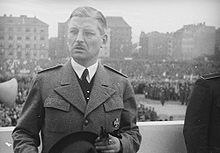
THE PAINTING ON AUERPERG'S WALL. NAZI LOOT? FAMILY SECRETS?
READ ON:
MY NEW NOVEL WILL BE LAUNCHED ON 1 MAY.
Monday, 2 April 2018
Thursday, 22 March 2018
#Amreading Kureshi, Dermansky, and Nguyen. Am pondering sex in novels.
I just finished reading Kureshi’s The Nothing. The protagonist sits on his wife’s face. Or else, he reams out her arsehole. My sense of smell would not allow me to participate in either scene, and I would certainly not get off on it. Maybe the wife didn’t either – Kureshi doesn’t say if she did. Perhaps she (that is, the woman he imagined) was a masochist and in need of degradation, and those acts had nothing to do with sexual gratification.
Now I’m reading Dermansky’s The Red Car, and her protagonist provides
blow jobs and does sixty-nine, on the beach, on a couch, in the backseat of a
car, and in some bushes in a park. Maybe that didn’t have anything to do with
sexual gratification either. The author describes it as being an essential
effort, like trying to do well on SATs.
Doesn’t anyone have sex for
pleasure anymore? Or because they are attracted to their partner? No, that
question is incidental.
“Please don’t break up with me,” he said. “I need you.”
And, according to Dermansky, she
obliged and didn’t.
I wonder if Kureshi’s
protagonist would have gotten off his wife’s face if he had asked him nicely.
But really, I think Viet
Thanh Nguyen got it right: Dating in America isn’t about sex. It’s business, he
says in The Sympathizer. “A male and
a female set a mutually agreeable time to meet, as if to negotiate a potentially
profitable business venture.” It’s about investment and gain, whereas old-fashioned
romantics see it as courting loss.
Thursday, 11 January 2018
Sunday, 12 November 2017
#AMREADING MAGDA SZABO’S KATALIN STREET.
![]() |
| Image from 3bp.blogspot |
The novel follows the lives
of three families in Budapest through WWII and its political aftermath into the
post-communist era. It is a tragic tale, in which the survivors are filled with
guilt and regret and the dead continue to wander the streets full of longing.
Irén reflects on the nature
of time.
The past is inescapable. It is not only facts that are irreversible;
our past reactions and feelings are too. One can neither relive them nor alter
them.
We do not appreciate the
present. You always realize too late the
importance of drawing out the moment while you can, while it is still possible.
I was always in too much of a hurry, I just wanted the time to pass.
And when old age arrives, she
realizes:
The most frightening thing about the loss of youth is
not what is taken away but what is granted in exchange. Not wisdom. Not
serenity. Not sound judgment or tranquility. Only the awareness of universal
disintegration.
Monday, 23 October 2017
A VICTIM OF HIS TIME? #SCHUSCHNIGG LETTERS CONT.
The Gestapo kept Kurt
Schuschnigg in solitary confinement except for weekly visits by his wife, Vera.
He worried about his son, Kurt Jr., who was not allowed to attend school in
Vienna and had to be put into a boarding school in Munich.
Vera to Hermann Wopfner, 26
Jänner 1941
We have now removed the boy
from classes, and he studies privately with the director of his boarding school.
It is an expensive proposition, but it had to be done. He couldn’t cope with a
number of subjects and was at risk of failing in the fall. Under the present
arrangement, he has to try harder and learns a great deal more. We hope he will
pass. This business of his schooling is really a cross to bear!
Vera to Hermann Wopfner, 28
Feb 1941
You are asking about Kurt Jr.
That is a difficult chapter. He could be an excellent student if he wanted to. He isn’t stupid after all, but unfortunately he does not want to study! He is
terribly absentminded and playful and has no idea of the seriousness of life.
Things are improved now because he is taught together with only one other
pupil, so that he can be put under greater pressure. Poor Kurt [Sr.] is very
concerned about him. I would like to get the boy into a military academy. Seven
new schools have been established on the initiative of the army, and he
urgently needs discipline. But it is questionable whether I will succeed. I
always come up against difficulties, but in my opinion it would be the best
solution for him.
Kurt Schuschnigg to his
brother Artur, 7 Mai 1941
Many thanks for taking my
Kurt [Jr.] to the opera! Please keep an eye on him if you can and it’s not too
much bother. I would like him to develop some interests, and not just in
airplanes and tanks! I’m sometimes concerned about the boy. Of course things
aren’t entirely his fault. In the final analysis he is a victim of the times.
Vera troubles herself a great deal about him, but she can’t work miracles. He
is basically a good soul, but easy-going and immature. I am very attached to
him! Well, you know yourself how much wife and children mean to a man!
(My trans. from Sofort Vernichten, ed. A. Binder and H. Schuschnigg)
Subscribe to:
Posts (Atom)