Saturday, 30 November 2013


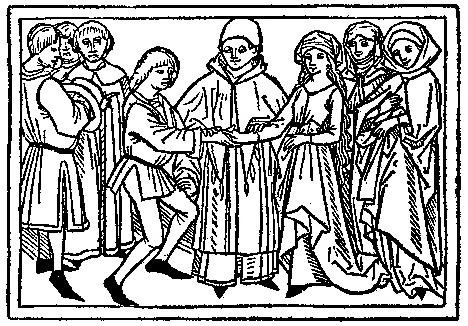
A ROYAL WEDDING IN CRACOW, 1592. Were they having too much fun?

On 31 May 1592, Anna of Austria married the Polish king Sigismund II. The Polish nobility opposed this alliance. They sent a posse to guard the border and prevent Anna from entering the country, but she outfoxed them and reached Pless (Pzczyna) on 26 May. According to the Fugger Newsletters, she holed up there and “practiced Italian dance steps” in preparation for the wedding ball.

Also on the programme of festivities: A wedding masquerade that cost 50,000 ducats (about 5 Million dollars) because the participants were dressed in gold-embroidered clothes.

More extravagance: The bridal coach was pulled by six black and six white bears, which were made to dance afterwards, “so that there would be sufficient drollery”.

You thought paparazzi were a modern phenomenon, reflecting our preoccupation with the lives of the rich and famous? Read on:

The informant of the Fugger Newsletter clearly had the makings of a tabloid journalist. He snuck into the royal couple’s bedroom and provided this breathless description: “It is a very spacious chamber, with the royal bed set up in the middle thereof. The bed has velvet curtains, and is surrounded by velvet-covered chairs. On the bed lies a coverlet lined with sable furs. On the wall, there is a portrait of the Royal bride wearing a white and silver robe and looking at you with a laughing mouth, so as to make the King laugh likewise when he looks at the picture.”

Meanwhile, in Germany, Count Octavian Fugger felt that such fun was unwarranted “in these present grievous times, with death rampant, with wars, strife, and tribulation everywhere.” He had posters affixed to the church doors of his estates, “forbidding most forcibly all public expressions of joy, such as singing, whistling, dancing, masques, promenading in the street and other worldly merry-making.” He made an exception for weddings, “provided they were conducted with all modesty and the accompaniment of muted string music.”

The weddings on his estate must have been dreary affairs. No, wait, I just realize there is nothing in his injunction about getting drunk.

Thursday, 28 November 2013


THERE ARE NO WITCHES IN GERMANY?

Check out mycuriouscabinet@wordpress.com
You’ve read my posts on witch trials and the procedures outlined in THE HAMMER OF WITCHES -- if not, check them out below. But now let me backtrack: Not everyone believed in witches. Here is what German reformer Martin Luther thought about them:

“When I was a child, there were many witches and sorcerers, who worked their magic on animals and human beings, and especially on children, and did great harm otherwise. Now in the light of the gospel these things are no longer so common, for the gospel drives out the devil with all his illusions.” But in a way the devil still “bewitches” people by giving them “a false opinion of Christ and turning them against Christ.”

A generation after Luther, the German physician Johann Weyer declared that witchcraft was an illusion, a “trick played on the optical nerves.” So-called witchcraft could usually be explained by “the stupidity of old age, the inconstancy and fickleness of females, a weak mind, despair, and mental illness.” Like Luther, however, he suspected that the devil was behind those illusions. People might be “deceived by their imagination or by the wiles of the evil spirit”. Weyer’s book was so popular that it went through four editions (1563-68). 
 
But Weyer's arguments did not save Walpurga Hausmann, widwife of Dillingen. Her judges were convinced that she was actually in league with the devil. Here is a list of her confessed misdeeds:
  • Solicited one Hans Schlumperger with lewd words and gestures,
  • rode on a pitchfork,
  • killed infants at birth before they had a chance to be baptized,
  • made a child fall into the millpond and drown,
  • caused miscarriages,
  • sucked blood from a child,
  • brought about the death of cows, pigs, and geese,
  • caused hail once or twice a year.
For these misdeeds she was burned at the stake in September 1587. For good measure, her ashes were “carried to the nearest flowing water and thrown thereinto.”

Sunday, 24 November 2013


A MILLION CALORIES:  A wedding feast, 1587
 
My last five posts were about the dark side of the 16th century. Let’s take a break from blood and gore today and look at the good life: a list of food and drink consumed at a wedding in Prague, 1587.

The list comes from the so-called Fugger Newsletters. The Fuggers were German merchant-bankers and venture capitalists. The Newsletters is a collection of memos sent by agents in branch offices all over Europe and in Asia to “head office” in Augsburg. They contain political and military news that might have an impact on the economy, but also descriptions of social customs, sensational crimes, or natural disasters.

One of the newsletter lists what the Bohemian nobleman William of Rosenberg offered his wedding guests:
  • Venison: 12 tons, including 36 deer, 36 boars, 49 roes, and 11,560 field hares
  • Poultry: 27 turkeys, 272 pheasants, 1910 partridges, 50 Westphalian cocks, 200 Indian cocks, 500 fattened capons, 560 fattened hens, 900 young hens, 1350 fattened geese
  • Meat: 9 tons of suckling pigs, 75 oxen, 754 sheep, 173 calves, 221 lambs, 32 fattened pigs, 160 young sows, 1290 rabbits.
  • Eggs and Dairy products: 20,620 eggs, 17 hundredweight butter, 2 tons of cheese.
  • Fish: 960 Skate, 70 char in pastry, 300 large pike, 420 small pike, 5,800 carp.
  • Wine: 70 pails Rhine wine, 100 pails Hungarian wine, 40 pails Moravian wine, 17 barrels Austrian wine, 47 barrels Bohemian wine, 10 kegs sweet wine
  • Beer: 150 barrels pale ale, 8 barrels Rakonitz beer, 18 barrels barley beer
  • Also: “a goodly amount” of spices, marzipan, sweetmeats, wheat rolls and rye bread.
“In his estates, towns, and villages, a considerable number of poor people were likewise fed, and it is not yet known how much has been consumed altogether.”


Thursday, 21 November 2013


TO BURN OR NOT TO BURN. Tales from the records of the Spanish Inquisition

In the popular imagination the Spanish Inquisition is associated with heretics being burned at the stake. But the statistics show that executions were infrequent. Here are some figures:

  • Some 26,000 people were tried in Aragon between 1540 and 1700 – 2 percent were executed (the judicial term for this was “being relaxed”, meaning handed over to the secular government for execution).
  • In Toledo, 1422 people were tried between 1575 and 1610 -- 15 were “relaxed”. Others were scourged, imprisoned, had their property confiscated, served on galleys, or were exiled. 179 were acquitted or had their case dismissed. The majority of those found guilty was formally reconciled with the church and had to walk in an auto-da-fe.

What is an auto-da-fe? A public ritual, in which heretics had to demonstrate that they were penitent. They took part in a procession, wearing sackcloth (sanbenito) and carrying candles or crosses. Their sentences were read out aloud, and they fell on their knees to give thanks to God (or just thanks for having escaped the clutches of the Inquisition?)

Witches and Jews were not the only ones dragged before the tribunals. The Fugger Newsletter (a forerunner of today’s newspaper) lists the 38 people who walked in an auto-da-fe in Seville, 3 May 1579. There were Jews, Moors, nuns, Lutherans, escaped slaves, and fornicators.  One was burned at the stake. The others were reconciled with the church.
Here are examples of the sentences handed down:
  • Juan de Color, a black slave, 35 years old, “reviled the name of Our Dear Lady” and denied her miracles: 2 years imprisonment.
  • Juan Corineo, a Moor, said: “Our Dear Lady did not conceive as a virgin”: 100 strokes of the rod.
  • Francisco Gonzales married twice: 100 strokes of the rod and three years on a galley.
  • Francisco Berocano “said that it was no sin if a woman tgoes to a man and they copulate.” No punishment since he “disavowed his words as frivolous.”
  • Orbrian, a native of Flanders, 30 years old, burned paintings of Jesus, endorsed the teachings of Luther, and “showed great stubbornness”: goods confiscated, burned at the stake.

Sunday, 17 November 2013

TWO CASES OF WATERBOARDING, 1526 AND 1530


In the summer of 1525, the shoemaker Silvestre Gonzales of Las Palmas, a convert to Christianity, was accused of relapsing into Judaism -- eating kosher meat and celebrating the Sabbath in his house. He was gagged, seated on an ass, and thrashed through the streets of Las Palmas. The following year, he insisted that none of the accusations against him had been proven. Wrong move! He was tried again.
From the records for the second trial:
"23 January 1526:
He is sentenced to be put to torture and is bound hands and feet to a frame; then water is poured down his throat. After the second jar of water, he begs to be unbound and promises to speak the truth. He is a dog and a Jew, and if they will only unbind him, he will tell them the number of Jews on the island. [He also implicates his father]. Two days later he declares that his confession made under torture was a lie, that he said the first thing that came to mind to be set free. He is again put to torture, and after the second jar of water, admits that he is a Jew but insists that he gave false testimony against his father. After four more jars of water, he begs to be released and swears to speak the truth.

24 January 1526:
He says that what the witnesses have said about him is untrue.

31st January 1526:
The judges are of the opinion that he has perjured himself and shows no remorse and must be handed over to the civil authorities [for the death penalty].”

Silvestre was burned at the stake on February 24, 1526, together with his father Alvaro. Alvaro had a previous conviction. On that occasion he had been sentenced to do public penance. He was gagged (for uttering blasphemies) and had to stand at the church door for three Sundays holding a candle and wearing the corozo (a kind of pointed dunce cap).


In August 1530, Johan de Xeres, a silk merchant of Las Palmas, was accused of keeping the fast of Yom Kippur. He was “stripped and tied to the ladder in preparation for the water torture. After receiving eleven jars of water, the prisoner says that, seeing he must die, he wishes to confess the truth. The charges against himself and his relatives are true. Being brought into court again, he declares that the confession was made in his death agony and is false.”

Johan de Xeres was handed over to the secular authorities for capital punishment. His property was forfeited to the Crown.